Why That 'Free' Drug Coupon Is Actually Making Your Medications More Expensive

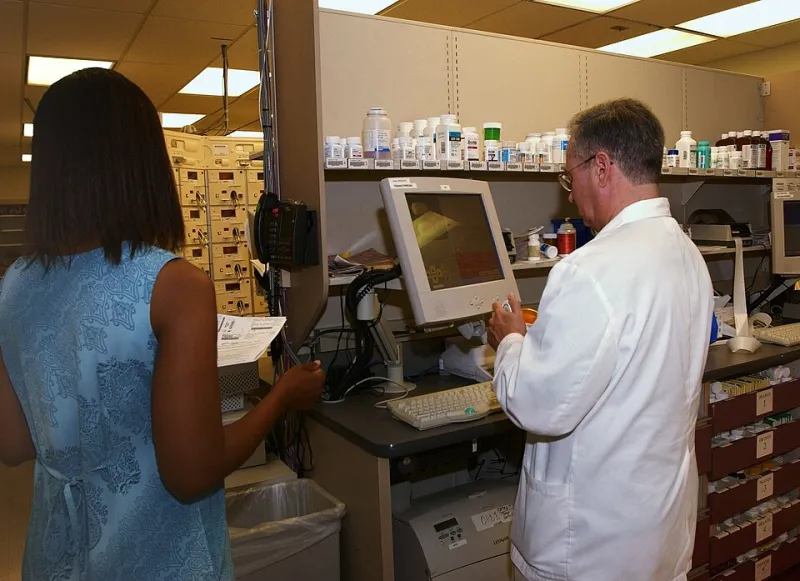
Photo: person holding pharmaceutical coupon card at pharmacy counter skeptical expression, via static.independent.co.uk
Walk into almost any doctor's office and you'll probably spot a pile of glossy brochures near the front desk. They promise things like "Pay as little as $0 for your first month" or "Save up to $150 per fill." Sounds amazing, right? Before you grab one and sprint to the pharmacy, it's worth understanding what these coupons are actually designed to do — because spoiler alert, it's not to save you money in the long run.
The Coupon That Isn't Really a Coupon
Manufacturer copay cards and patient assistance coupons operate differently from the kind you clip out of a Sunday paper. A grocery coupon passes a small discount directly to the shopper, end of story. A pharma coupon is a strategic marketing tool disguised as consumer generosity.
Here's the basic mechanic: a drug company releases a brand-name medication — let's say it costs your insurance plan $400 a month. Your copay under your plan might be $80. The manufacturer hands you a card that covers that $80, so you walk out paying nothing. Feels like a win.
But your insurance still paid $400. The drug company collected $400. And your insurer just logged a $400 claim against your plan. That claim eventually feeds into how your premiums are calculated. The manufacturer got full price. You got a temporary illusion of savings.
Who Really Benefits From These Programs
Let's be honest about the motivation here. Brand-name drugs face a serious threat the moment their patents expire: generic competition. Generics are chemically identical to their brand-name counterparts but can cost 80–90% less. That's not a small difference — that's the difference between a $400 monthly bill and a $30 one.
Manufacturer coupons are most aggressively deployed right around the time a generic alternative is either available or about to become available. The goal is to keep you on the brand-name drug long enough that switching feels like a hassle, or until your plan resets and you've burned through your deductible on the pricier version.
Pharmacists and healthcare economists have a term for this: "copay accumulator" programs. Some insurance plans have actually started countering manufacturer coupons by refusing to let those payments count toward your deductible or out-of-pocket maximum. So you might use the coupon for three months, feel fine, and then suddenly face a brutal out-of-pocket hit in month four when the coupon runs out and your deductible still reads zero.
The Uninsured Pay the Steepest Price
Here's where things get genuinely unfair. When brand-name drugs dominate the market because coupons artificially suppress generic adoption, the list price of those drugs stays high — or climbs higher. That list price is what uninsured and underinsured Americans often pay at the counter.
If you don't have insurance, those coupons are frequently useless to you anyway — many are explicitly restricted to commercially insured patients and cannot be combined with government programs like Medicaid or Medicare Part D. So the people with the least financial cushion end up subsidizing a system that was never designed to help them.
How to Spot the Trap Before You Fall Into It
Recognizing a coupon trap isn't about being paranoid — it's about asking a few smart questions before you leave the doctor's office or the pharmacy counter.
Ask if a generic exists. Before accepting any brand-name coupon, ask your pharmacist directly: "Is there a generic version of this?" If the answer is yes, the math almost always favors the generic, even without any coupon.
Check whether the coupon counts toward your deductible. Call your insurance company and ask specifically whether manufacturer copay card payments apply to your deductible and out-of-pocket maximum. If they don't, you could be setting yourself up for a nasty surprise mid-year.
Run the numbers past your deductible phase. The coupon covers your costs now, but what happens in month four? Map out what the drug costs you once the coupon expires or hits its annual cap.
Use a real price comparison tool. Sites and apps that show actual cash prices — not insurance-adjusted prices — can be eye-opening. You may find that the generic version of a drug, purchased with a legitimate discount program, costs less than the brand-name drug even with the manufacturer coupon applied.
The Better Alternative Most People Miss
At CheapRx Pills, we're big believers in transparency. The honest truth is that for most maintenance medications — the kind you take every month for years — the generic version purchased at a competitive cash price will beat a manufacturer coupon over any meaningful time horizon.
Bulk purchasing is another angle worth considering. Many chronic medications are significantly cheaper when purchased in 90-day supplies rather than 30-day fills, and that discount compounds when you're already buying a lower-cost generic. The savings stack in ways that a one-time manufacturer coupon simply can't match.
It's also worth knowing that legitimate discount programs — ones not run by the drug manufacturer — don't have the same conflict of interest baked in. They're designed to reduce your cost, not to steer you toward a specific product.
Bottom Line
Pharmaceutical coupons aren't illegal, and they're not always the wrong choice. But they deserve the same skepticism you'd apply to any deal that seems too good to be true. When a billion-dollar drug company is handing you free money at the pharmacy counter, it's worth asking what they're getting out of the arrangement — because they're definitely getting something.
The smartest move is almost always to start with the generic, compare real cash prices across multiple sources, and build a long-term prescription strategy rather than chasing short-term coupon savings. Your future self — and your annual out-of-pocket total — will thank you.