Why the Same Prescription Costs $8 in One State and $95 in Another — And How to Use That to Your Advantage
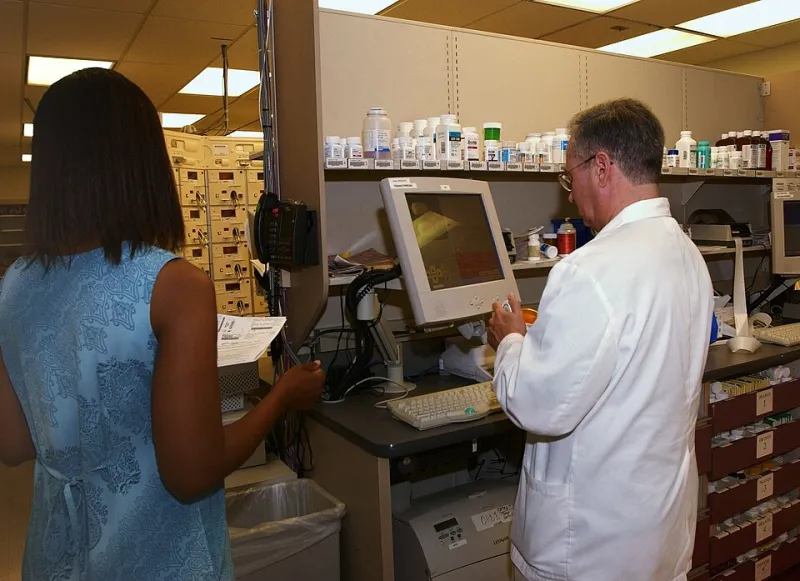
Photo: CDC, Public domain, via Wikimedia Commons
Imagine two people with the same diagnosis, the same prescription, and the same insurance status — one living in Minnesota, the other in Mississippi. They walk into their respective pharmacies and pay completely different prices for an identical medication. This isn't a hypothetical. It's Tuesday in America.
Drug pricing in the United States is a patchwork of state regulations, pharmacy competition, insurance contract quirks, and local market forces that creates wild price swings across state lines. Understanding those gaps — and knowing how to exploit them legally and practically — can mean the difference between affordable treatment and rationing your pills to stretch a 30-day supply to 45.
Let's dig into what's actually driving these regional differences, which states are doing the most for residents on tight budgets, and what you can do regardless of where you live.
Why Prices Vary So Dramatically by Location
There's no single federal law that sets retail drug prices in the US. Unlike most developed countries, the government doesn't directly negotiate or cap what pharmacies can charge. That leaves pricing up to a complex web of players: pharmacy benefit managers (PBMs), insurance companies, wholesalers, state Medicaid programs, and the pharmacies themselves.
A few key factors create geographic price variation:
Pharmacy competition: In densely populated urban areas — particularly in states like California, New York, and Illinois — you've got independent pharmacies, national chains, warehouse clubs, and grocery store pharmacies all fighting for your business. That competition naturally pushes prices down. In rural states or small towns, a single pharmacy might have a near-monopoly, and prices reflect that.
State Medicaid and assistance programs: Some states have invested heavily in drug affordability programs that extend beyond just Medicaid recipients. These programs sometimes set reference prices or create negotiating leverage that trickles down to uninsured and underinsured residents.
State laws on PBM practices: States like New York, Maine, and Arkansas have passed legislation restricting certain PBM pricing practices — including gag clauses that prevented pharmacists from telling patients when paying cash was cheaper than using insurance. Those laws can meaningfully shift what consumers actually pay.
Mail-order and online pharmacy access: States with more permissive regulations around mail-order pharmacies tend to have residents who access better pricing through those channels.
States Leading the Way on Drug Affordability
Minnesota has consistently been one of the more proactive states on drug pricing. The Minnesota Board of Pharmacy maintains relatively strong consumer protections, and the state's robust competition among pharmacy chains — plus strong use of 340B pricing programs at qualifying health centers — gives residents more options than many other states.
Maine passed landmark legislation creating a drug pricing board and importing mechanisms that, while still evolving, signal a serious commitment to tackling costs at the state level. Maine residents also benefit from some of the country's more aggressive low-income drug assistance programs.
California is a mixed picture. Urban areas like Los Angeles and San Francisco have intense pharmacy competition that keeps prices reasonable, and the state's Medi-Cal program is one of the largest in the country. However, rural California can look very different — pharmacy deserts exist in parts of the Central Valley and Northern California where options are limited and prices climb accordingly.
Colorado has made notable strides with its Prescription Drug Affordability Board, one of the first in the nation with actual authority to set upper payment limits on certain high-cost drugs. It's a model other states are watching closely.
Washington State offers a state-run prescription drug program that provides discounts to uninsured and underinsured residents, and its urban centers have strong pharmacy market competition.
States Where Residents Are Paying More
On the other end of the spectrum, states with limited pharmacy competition, weaker consumer protection laws, and smaller state assistance programs tend to see higher out-of-pocket costs for residents.
Mississippi, Alabama, and West Virginia consistently appear in analyses of states with the highest uninsured rates and the least robust state-level drug assistance infrastructure. Residents in these states are often navigating limited pharmacy options, and without strong state programs to fill the gaps left by federal coverage, many are paying full retail prices — which can be brutal.
Wyoming and Montana face the geographic reality of sparse populations spread across vast distances. Fewer pharmacies mean less competition, and the logistics of drug distribution to remote areas add costs that ultimately land on consumers.
This doesn't mean residents of these states are out of luck — it just means they need to be more proactive about finding alternatives, which we'll get to shortly.
The Mail-Order Advantage (And Why More People Should Be Using It)
Here's the single most powerful tool that erases geographic disadvantage: mail-order pharmacies. If you're in a rural state with one pharmacy option and sky-high prices, a reputable mail-order or online pharmacy can deliver the same FDA-approved medication to your door at a fraction of the local price.
Mail-order pharmacies typically offer 90-day supplies at significant discounts compared to 30-day fills at brick-and-mortar locations. For maintenance medications — things like blood pressure drugs, statins, thyroid medications, or antidepressants that you take every day for years — this is a no-brainer financially.
At CheapRx Pills, bulk purchasing options mean that the math gets even better when you're buying a 90-day supply versus a monthly refill. The per-pill cost drops, the shipping is consolidated, and you're not scrambling to refill every four weeks.
Practical Steps to Find the Lowest Price in Your Area
No matter which state you call home, here's how to actively hunt down the best prices:
-
Use price comparison tools before you fill. Don't just hand your prescription to the first pharmacy you walk into. Websites and apps that aggregate pharmacy pricing in real time can show you the spread across nearby locations — sometimes a difference of $40 or more for the same drug at pharmacies within a mile of each other.
-
Ask about cash pricing vs. insurance pricing. Thanks to anti-gag clause laws now in effect across most states, your pharmacist can tell you when paying cash is cheaper than running it through your insurance. Sometimes it is — significantly so.
-
Check your state's pharmaceutical assistance programs. Most states maintain some form of prescription assistance for low-income or uninsured residents. A quick search for your state name plus "prescription assistance program" will surface what's available. These programs are chronically underutilized.
-
Look into 340B-covered health centers. Federally Qualified Health Centers (FQHCs) and certain nonprofit hospitals participate in the 340B program, which gives them access to deeply discounted drug prices. If you qualify to receive care at one of these centers, you may access those lower prices through their affiliated pharmacies.
-
Buy in bulk when your medication is stable. If you've been on the same drug at the same dose for a while and your doctor isn't expecting changes, ask for a 90-day prescription. Then compare the 90-day mail-order price against your local pharmacy's 90-day price. The gap is often eye-opening.
-
Don't ignore manufacturer patient assistance programs. For brand-name drugs without generics, most major pharmaceutical companies offer patient assistance programs for people who meet income thresholds. These are separate from state programs and can provide medications at no cost or very low cost.
Your Zip Code Isn't Your Destiny
The geographic lottery of US drug pricing is genuinely unfair. Nobody should pay more for insulin or a blood pressure medication because they happened to be born in a rural state with limited pharmacy competition. But until federal policy catches up — and that's a conversation for another day — the best defense is knowing the system well enough to work around its worst features.
Whether you're in a state with aggressive affordability programs or one that's still catching up, the combination of generic switching, bulk purchasing, mail-order options, and price comparison tools can dramatically reduce what you spend at the pharmacy. At CheapRx Pills, that's exactly the kind of savings we're built around — because affordable medication shouldn't be a geographic privilege.