Your Deductible Is a Profit Machine — Here's Who's Getting Rich Before You Pay a Dime

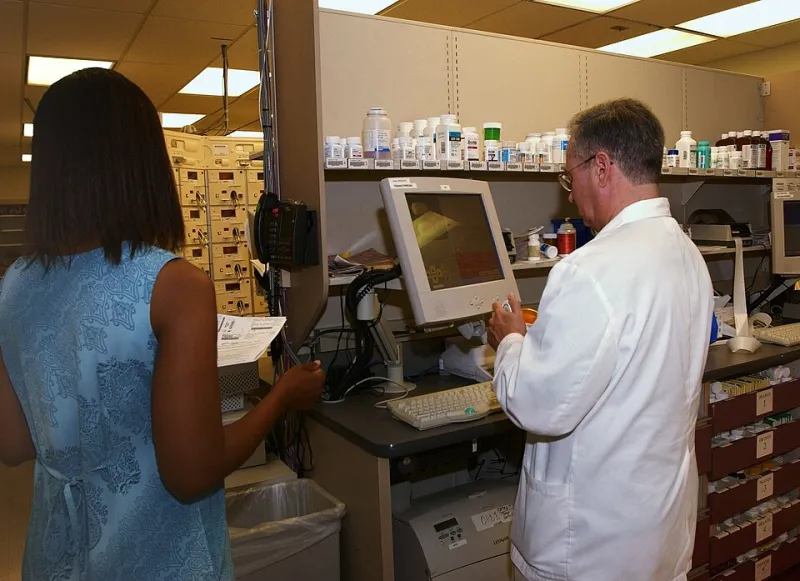
Photo: frustrated patient paying at pharmacy counter with insurance card, via www.catholicmatch.com
You're standing at the pharmacy counter, insurance card in hand, fully expecting your coverage to kick in. Then the pharmacist tells you the total: $280. Out of pocket. Because you haven't hit your deductible yet.
What stings even more? The actual cost to manufacture that pill — the raw materials, the tablet press, the bottle — might be somewhere between $4 and $12. So where does the other $268 go?
The honest answer is: a lot of places. And almost none of them are working in your favor.
The Supply Chain Nobody Draws on a Diagram for You
Here's the basic path your prescription takes before it reaches your hands:
- A pharmaceutical manufacturer produces the drug and sets a list price (also called the wholesale acquisition cost, or WAC).
- A pharmacy benefit manager (PBM) — a middleman company — negotiates with the manufacturer for rebates in exchange for favorable placement on your insurer's formulary.
- Your insurance company builds a plan around that negotiated price — but the rebates the PBM collects often don't get passed down to you.
- The pharmacy marks up the drug based on what the PBM reimburses them.
- You show up and pay whatever your plan says you owe — which, if you're still in your deductible phase, is usually the full negotiated rate.
The kicker? That "negotiated rate" your insurance company proudly advertises is often higher than what you'd pay if you just bought the medication with a discount card. No joke.
What "Deductible Pricing" Actually Means
Most Americans with employer-sponsored insurance have annual deductibles ranging from $1,000 to over $4,000. Until you hit that number, you're paying list-adjacent prices — not the discounted rates your insurance eventually covers.
Here's where it gets infuriating: the price your plan uses to calculate your deductible spend is often the full contracted rate, including the insurer's markup. So you're paying more per pill during your deductible phase, and the insurer is still logging it as your "cost" toward your deductible. The math is designed to take a while to work out in your favor.
Meanwhile, the manufacturer may have already sold that same drug to a hospital system at a steep discount under federal pricing programs. The same molecule. The same factory batch. A completely different price.
The Rebate Racket Nobody Talks About at Open Enrollment
Pharmaceutical manufacturers pay billions of dollars in rebates to PBMs every year. These aren't small numbers — in 2022, rebates in the US drug supply chain totaled an estimated $200+ billion. The PBMs keep a significant chunk. Some gets passed to insurers. Very little, if any, gets passed to the person actually taking the medication.
In fact, there's a growing body of evidence suggesting that rebate structures actually incentivize higher list prices, because a larger rebate off a higher sticker price looks better on paper for the PBM's contract negotiations. You, the patient, are caught in the crossfire.
So What Can You Actually Do About It?
Glad you asked — because this is where things get actionable.
1. Check the manufacturer's patient assistance program (PAP) Almost every major pharmaceutical company offers a PAP for patients who qualify based on income. Some programs are surprisingly generous — covering the full cost or reducing your copay to $0 or $10/month. Visit the manufacturer's website directly or use NeedyMeds.org to find what's available for your specific drug.
2. Ask your doctor about copay cards For brand-name drugs especially, manufacturers offer copay assistance cards that cap your out-of-pocket cost — often at $5 to $35 per fill — regardless of your deductible status. These aren't advertised loudly, but they exist and they're legitimate. Your prescriber's office usually has them or can point you toward the manufacturer's hub.
3. Price your medication without insurance This sounds backward, but hear us out: tools like GoodRx, RxSaver, or the discount pricing at CheapRx Pills (cheap8cpills.com) often show cash prices that are lower than your in-deductible insurance rate. If your plan allows it, you can pay cash and still have it count toward your deductible — though you'll want to confirm that with your insurer.
4. Call and negotiate Seriously. Pharmacies — especially independent ones — often have more flexibility on pricing than chain stores. Calling ahead, asking for the cash price, and comparing a few options takes 10 minutes and can save you real money.
5. Ask your doctor about therapeutic alternatives If the brand-name drug your insurer prices at $300 has a generic equivalent or a therapeutically similar medication at $18, that conversation is worth having. Physicians aren't always looped in on your specific plan's formulary, and a quick call to their office can open up cheaper options.
The Bottom Line
The gap between what it costs to make your medication and what you pay at the counter isn't an accident — it's a system with a lot of hands in the cookie jar. Your deductible is the period when you feel that gap the hardest, because you're absorbing the full weight of a pricing structure built for everyone except you.
The good news: once you know the levers exist, you can start pulling them. Manufacturer programs, discount pricing tools, cash-pay options, and a little bit of phone time can meaningfully reduce what you're spending — even before your deductible resets in January and the whole cycle starts again.
At CheapRx Pills, we believe affordable medication shouldn't require a finance degree. Start comparing prices on your prescriptions today and see exactly how much you've been leaving on the table.